Mastering Finishing Touches: Essential Embellishments for Handmade Projects
A thoughtful guide to the small details that elevate craft—from textiles to pottery to paper—rooted in technique, material wisdom, and a humane appreciation for making by hand.
The domain handmadetopper.com flirts with a notion that is both practical and poetic: the finishing touches that crown a handmade object. In conversation with the long arc of making, this article explores the core embellishments that give texture, durability, and a certain quiet nobility to craft. It is a field guide for beginners and a thoughtful refresher for seasoned makers, an invitation to consider not just what we make, but how we finish it—so that the work speaks with clarity, tact, and confidence.
Think of finishing touches as the final act of a performance, where lighting, sound, and posture converge to reveal intention. The embellishments discussed here—knotting on textiles, careful mounting in paper arts, glaze and seal on ceramics, and beadwork on jewelry—are not mere decoration. They are agreements among materials, tools, and the maker’s eyes about how a piece will endure, how it will be handled, and how its story is told.
Core finishing techniques across disciplines
The projects we undertake span a spectrum—from dance-card precision in textiles to the tactile hush of pottery glazes. Across these domains, certain techniques recur with a quiet authority. They help strengthen seams, refine surfaces, and lock colors in place. The following overview highlights these techniques and provides practical guidance for choosing compatible materials and tools.
Textiles and fiber arts
- Knotting and tassel work: Foundations for edges, decorative elements, and secure finishes on blankets, scarves, and wall hangings.
Paper, book, and paper-coted crafts
- Mounting and adhesion: Acid-free glues, double-sided tapes, and score-and-fold precision to ensure durability and clean lines.
- Foiling and gilding: Subtle metallic accents that catch light and elevate design without overpowering the composition.
- Sealing and protective finishes: Varnishes and gels that protect delicate paper surfaces while preserving color.
Ceramics, pottery, and small-scale sculpture
- Surface treatment: Wax resist, slip trailing, and glaze layering that yield depth and variation without unintended cracking.
- Sealing and stabilization: Food-safe or inert sealants that improve wear resistance on functional wares.
- Edge finishing: Burnishing and nibbing to refine rims and edges for a tactile, finished feel.
Jewelry and beads
- Bead mounting and securing: Techniques to ensure beads stay in place through wear and movement.
- Finishing metals: Patina, patination protection, and non-tarnish coatings that extend longevity.
- Preparation and sealing: Clear resins and sealants that protect delicate components without dulling sparkle.
Material primer: choosing adhesives, paints, resins, and sealants
The second axis of finishing touches concerns material compatibility. A well-chosen adhesive or sealant does not merely bind—it respects the materials’ breath, texture, and reaction to light and heat. Beginners often confront a triad of questions: Will this glue adhere to this fiber? Will the paint crack over time? Is there a safe sealant that won’t yellow on my wood or fabric?
Adhesives and bonding
- Textile adhesives for fabric overlays should remain flexible after drying to reduce stiffness in the finished piece.
- Wood glues with elastic properties help when combining materials with different expansion rates.
- Epoxies and resins require accurate mixing and curing conditions; always observe safety guidelines and ventilation needs.
Paints and coatings
- Acrylics offer fast-drying versatility but may require sealing on porous surfaces to prevent bleed and texture loss.
- Oil-based paints provide a durable, hard-wearing surface but demand careful ventilation and drying time.
- Water-based varnishes can preserve color while providing a protective layer—test for compatibility on sample swatches first.
Resins and encapsulation
- Clear resins create glass-like surfaces that magnify embedded textures—perfect for jewelry and mixed-media pieces.
- Non-yellowing options exist for long-term color stability; ensure proper ventilation during curing.
Sealants and protective layers
- Choosing a sealant depends on the substrate: choose water-based for fabrics, solvent-based for plastics, and consider UV resistance for sun-exposed pieces.
- Test includes not only adhesion but also how the sealant interacts with color and texture over time.
Troubleshooting and best practices
The unwelcome surprises of crafting—warping, color bleed, or brittle edges—often yield the most instructive moments. The following practical guidelines reach across disciplines, with a focus on reproducible, reliable outcomes.
- Adhesion failures: Clean surfaces, test a small patch, and allow for adequate curing time. Sometimes a different bonding method (mechanical fastener, heat-set, or fabric tape) can rescue a project.
- Warpage and tension: Allow materials to acclimate to surrounding conditions; avoid forcing a flexed surface into a tight seam.
- Color bleed and bleed-through: Use barrier layers or primers on porous surfaces prior to applying color layers; work in thin, layered applications.
- Sealing and durability: Build up layers gradually for an even, non-cloudy finish; avoid over-coating a single spot.
A curated look at exemplars: 3 key individuals across time
To illuminate how finishing touches have traveled through time, we consider three individuals whose work, philosophy, and technique illuminate the craft’s inner logic. Each figure emerges from a different era yet resonates with the same insistence on finish as an ethical, aesthetic, and practical discipline.
Mary Delany (1700s, late Georgian decorative arts)
A pioneer in delicate, layered botanical cut-paper works that required precise edge finishing and careful material management. Delany’s practice reveals how restraint and precision in a finishing step can elevate an entire composition, turning a simple silhouette into a living spectrum of texture.
By focusing on careful trimming, subtle color layering, and a disciplined approach to mounting, Delany demonstrated that finishing touches are not mere adornment but a governance of form and perception.
Hokusai (1760s–1840s, printmaking and woodblock finishing)
Revered for the refinement of line, ink, and surface, Hokusai’s approach to finishing—especially in the careful alignment of blocks and the final inking phases—offers a masterclass in how surface treatment and print discipline shape mood and movement.
His work embodies a philosophy where the last pass of ink and the precise edge determine the image’s breath, reminding makers that finish is inseparable from intention.
Anna Wainwright (mid-20th century, textile finishing)
A modern crafts advocate, Wainwright’s practice emphasized durable edge finishing, careful seam handling, and the use of gentle, fabric-friendly finishes. Her work underlines the importance of finishing for wearer comfort, longevity, and everyday usability.
Wainwright’s ethos—practical techniques paired with patient, repeatable processes—maps neatly onto today’s non-commercial, educational approach to making.
Product spotlight: a tangible finishing touch
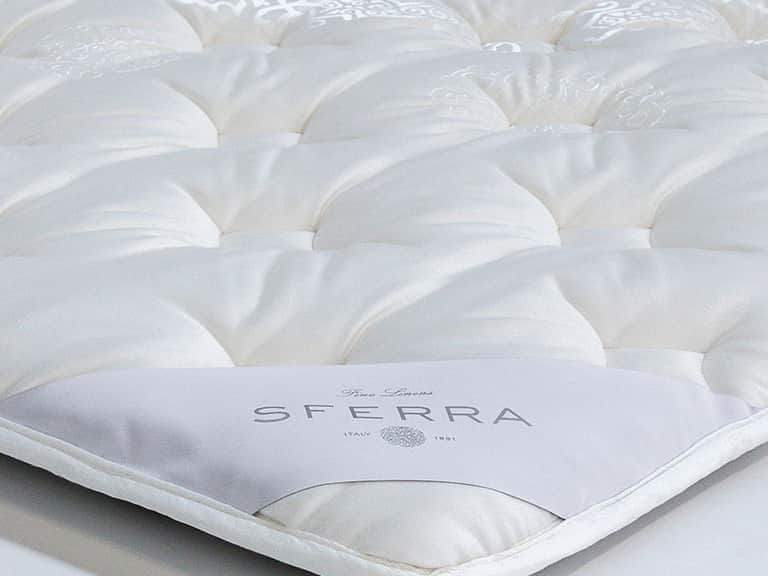
While the craft world thrives on knowledge shared freely, certain well-crafted items embody the principle of finishing as a premium experience. Consider the Sonno Notte Comfort Mattress Topper, a refined topping that demonstrates how layered materials and thoughtful finishing can transform a surface into an elevated experience. Though designed for sleep, its philosophy—careful layering of cashmere, silk, and wool with aerated gel foam, finished in silk Belgian damask ticking—echoes the craft mindset of choosing complementary materials, ensuring breathability, durability, and a tactile reward.
Sonno Notte Comfort Mattress Topper
Made to order in the USA, this topper blends cashmere, silk, and wool with aerated gel foam to deliver breathable, structured support. The silk blend Belgian damask ticking adds a refined finish that speaks to the ergonomic, tactile considerations at the heart of finishing touches.
Care: spot clean when necessary, vacuum lightly, rotate every 90 days. Not suitable for machine washing.
Sonno Notte Seasonal Mattress Topper
A two-faced, seasonally reversible topper wrapped in Silk Belgian Damask ticking. On one side, natural New Zealand wool with aerated gel foam for warmth in cooler months; on the other, organic cotton for breathability in warmer months.
Care: spot clean; rotate every 90 days; air dry if damp.
A practical direction for handmadetopper.com
This article has been written in the spirit of Direction B: Handmade finishing touches for crafts. The site’s aim is to empower makers with reliable, actionable guidance—techniques, material primers, safety reminders, and a gallery for community inspiration. The editorial lens foregrounds clarity, civility, and curiosity, with an eye toward evergreen content that remains useful across seasons and trends.
The proposed structure supports a flexible, scalable library:
- Core techniques: beginner, intermediate, and advanced tutorials that build upon one another.
- By craft category: textiles, paper, pottery/ceramics, jewelry, wood/metal embellishments.
- Seasonal and trend-based roundups: practical, repeatable patterns aligned with holidays and events.
- Resource library: primers on tools, materials, safety notes, and material comparisons.
A note on tone and editorial stance
The New Yorker’s voice—measured, insightful, and finely observed—serves as a North Star here. The audience for handmadetopper.com is discerning: curious about the craft, respectful of its history, and hungry for reliable, craft-oriented guidance without overt commercial pressure. The writing should feel intimate yet precise, weaving practical steps with larger reflections on material behavior, ethics of making, and the culture of sharing knowledge.
Starter sitemap and content ideas
If you’d like, I can expand this article into a starter sitemap and a three-month content calendar with concrete article ideas, checklists, and templates. Below is a compact preview of potential topics:
- Beginner’s guide to textile finishing: edges, hems, and simple knotted motifs
- Beading basics: choosing beads, thread, and secure mounting methods
- Wood and resin: making durable surface finishes for small decor items
- Seasonal toppers: roundups of ideas for holidays and celebrations
- Gallery submissions: how to photograph and present before/after projects
Conclusion: an invitation to finish well
Finishing touches are not afterthoughts but extensions of a maker’s intention. They encode care, patience, and a willingness to test, refine, and learn. By centering the craft’s final acts—sealing a surface, securing a bead, knotting with intention—we honor not only the work we produce but the people who will hold and use it. In this spirit, handmadetopper.com aims to be a reliable companion for makers who wish to elevate their projects with confidence, kindness, and craft-wisdom that endures.