Bedding · Materials Guide
Wool or Latex? How to Choose a Natural Mattress Comfort Layer
A mattress topper is a modest intervention with an outsized ambition: to make the bed you already own feel more like the bed you want. Wool and latex approach that task differently. One cushions through a pliable layer of fiber; the other meets the body with buoyant resistance. Choosing between them begins not with a promise of perfect sleep, but with the more practical question of what your mattress is failing to do.
Published November 16, 2026
A bed is a collection of compromises that we encounter, usually in the dark. The mattress may be sound but too firm at the shoulder; comfortably cushioned but warm by morning; or simply a little less inviting than it was when it first arrived. Replacing it is costly and cumbersome. A natural mattress comfort layer offers a smaller adjustment, adding material between the mattress and the sleeper without asking the underlying bed to become something it is not.
Among the materials used for that adjustment, wool and latex are often placed in the same conversation because both can be found in natural bedding and both can soften a sleep surface. But they do not deliver the same kind of softness. Wool is a resilient, breathable fiber that compresses and recovers in a yielding way. Latex is an elastic material that responds more directly to pressure, offering a buoyant sensation that may feel springier and more defined. Some toppers combine the two, layering their different qualities rather than asking one material to do everything.
The distinction matters. A topper can refine the surface comfort of a mattress, but it cannot reliably correct a mattress that is sagging, damaged, or fundamentally unsuited to the sleeper. Before comparing wool and latex, it helps to identify the discomfort you hope to change—and to understand how construction, thickness, care, and fit influence the result.
First, decide what “more comfortable” means
People tend to describe mattress discomfort in broad terms: too hard, too soft, too hot. Those descriptions are useful beginnings, not diagnoses. “Too hard” might mean pressure at the hips or shoulders, a sense of lying on the mattress rather than settling into it, or a pillow and sleeping position that place the body at an awkward angle. “Too hot” might involve the room, bedding, sleepwear, or the mattress itself. A topper changes one part of that system: the surface immediately beneath the sheets.
Think about the sensation you want to add. If the bed feels unyielding and you want a more forgiving, softly padded surface, wool may be worth considering. If you want a springy layer that cushions while pushing back, latex may be the closer fit. If your preferences sit between those descriptions, a wool-and-latex construction can offer both fiber cushioning and a more resilient core.
Sleeping position can inform the decision, though it should not dictate it. Side sleepers often look for pressure relief at the shoulder and hip; back and stomach sleepers may prefer a surface that does not feel excessively plush. Body shape, mattress firmness, and personal tolerance for sinking all influence the experience. The right comparison is not between a material and an abstract ideal, but between a material and the mattress beneath it.
What wool contributes
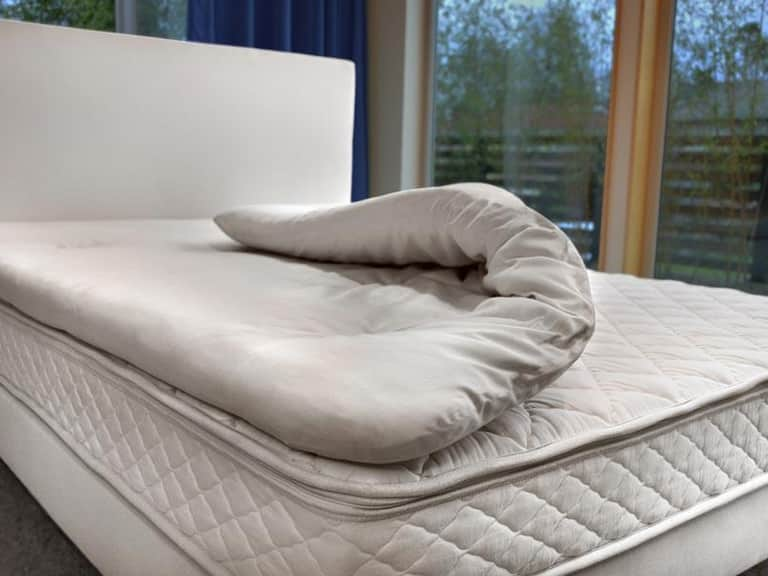
Wool toppers are generally built around batting or other wool fill enclosed in a textile cover, often cotton. The fibers form a soft, compressible layer, with a gently springing quality that differs from the slow, enveloping impression associated with some foams. Wool can absorb and release moisture, and its natural insulating behavior is one reason it appears in bedding intended for use across seasons. This does not make a wool topper a thermostat; room temperature, sheets, blankets, and individual comfort still matter.
The thickness and density of the fill affect how pronounced the change feels. A topper described as approximately three inches deep may create a more substantial cushion than a thin quilted layer, though measurements alone do not tell the whole story. Fill weight, quilting, cover fabric, and how the topper is secured all help determine whether it feels lofty, compact, or gently padded. Wool also settles with use. A little change in loft is part of the material’s behavior, not necessarily a sign that the layer has failed.
For a straightforward wool construction, the Naturepedic Wooly Mattress Topper is described as a three-inch layer of certified organic wool batting in an organic cotton sateen cover. Its care guidance calls for spot cleaning and regular turning or rotation. Another example, the Healthy Choice Organic Wool Mattress Topper, is described as approximately three inches thick, with organic wool between organic cotton fabric layers. These examples illustrate a familiar format: a fiber-filled comfort layer, rather than a solid elastic core.
Wool may suit someone seeking a soft, breathable-feeling layer and willing to follow more careful maintenance instructions. It is not automatically the best choice for every hot sleeper, nor does “natural” mean effortless. Many wool toppers are spot-clean only or should not be allowed to get wet. A mattress protector can help guard the investment, while airing and rotating may help keep the layer feeling more even.
What latex contributes
Latex has a different character. Rather than behaving like loose or quilted fiber fill, it forms a resilient layer that compresses under the body and rebounds when pressure changes. Many sleepers describe the result as buoyant: cushioning is present, but the surface seems to meet the body rather than simply yielding beneath it. The precise sensation depends on the latex formulation, firmness, thickness, and whether the material is a continuous core or part of a more complex construction.
Latex can be made through different processes, including Dunlop. “Natural” and “organic” refer to material sourcing and certification claims, not to a single universal feel. When comparing products, check what the topper contains, whether the latex itself is certified, what the cover is made from, and whether other materials are blended into the construction. A product description should clarify these points rather than rely on a label alone.
Thickness has a particularly noticeable effect on the scale of the change. A thin latex layer may add a modest amount of responsive cushioning; a thicker one may make the mattress feel substantially different. Firmness ratings can help with comparison, but they are not universal guarantees of how a topper will feel on a particular mattress. The support of the existing bed remains part of the equation.
When the materials are combined
A combined wool-and-latex topper is not a compromise in the sense of splitting the difference. It is a layered design: latex supplies much of the resilient support, while wool can contribute a more yielding surface and insulating qualities. The order, depth, and method of assembly matter. Wool wrapped around a latex core may feel different from latex placed between wool layers, and quilting or tufting can help keep components from shifting.
One example is the Organic Latex Topper - 3", a hand-tufted design combining two inches of synthetic-free Dunlop latex with approximately half an inch to one inch of organic wool, enclosed in organic cotton sateen. Its listed latex firmness is 23–27 ILD, and its care guidance is to spot clean with cold water and mild detergent. The design makes the contrast clear: latex provides the responsive base, while wool and cotton complete the outer layers.
A combination may appeal to someone who wants more cushioning than a latex-only surface suggests, while retaining the buoyant feel that wool alone may not provide. It also adds complexity. More materials mean more specifications to examine and potentially more specific care requirements. If you are sensitive to wool or latex, check the full materials list and consider relevant health guidance before choosing.
A practical comparison
| Consideration | Wool topper | Latex topper | Wool and latex |
|---|---|---|---|
| Typical feel | Soft, compressible, gently resilient | Buoyant, responsive, more elastic | A mix of fiber cushioning and springy support |
| What to examine | Fill, quilting, loft, cover, and how the fill is held in place | Latex process, firmness, thickness, cover, and certification | Layer order, thickness of each material, tufting or quilting |
| Care questions | Often spot clean; check restrictions on water and washing | Frequently spot clean only; check drying and airing guidance | Follow the complete care instructions for the assembled layer |
| May suit | Those seeking a breathable-feeling, fiber-filled cushion | Those who prefer responsive cushioning and a buoyant surface | Those looking for both fiber softness and latex resilience |
The table is a starting point, not a ranking. Labels such as “plush,” “soft,” and “supportive” are used inconsistently across makers. Construction details are more useful than adjectives when you are trying to predict whether a comfort layer will noticeably change your bed.
Thickness, firmness, and the mattress underneath
A topper’s depth is one of the clearest clues to how much it may alter the surface, but it is not a direct measure of softness. A thick, resilient latex layer can feel quite different from a thick wool fill. Two toppers of the same nominal thickness may also vary because their materials compress and recover differently. Whenever possible, compare the construction and firmness information alongside the overall depth.
Then consider the condition of the mattress. If it has a persistent dip or a damaged support layer, adding a topper may disguise the problem briefly without correcting it. A soft layer can follow the contours of a sagging mattress rather than restore a level sleeping surface. If the mattress is structurally sound but feels too firm, a topper is more likely to serve its intended purpose: adjusting comfort without replacing the bed.
Fit matters as much as feel. Confirm the topper’s dimensions against the mattress, including any less common size, and check its total depth against fitted-sheet pockets and bed-frame clearances. Some designs use corner straps; others rely on their size and weight to remain in place. A layer that shifts, bunches, or makes the sheets difficult to secure can undermine the comfort it was meant to add.
Care is part of the material choice
Natural bedding is often presented as if material choice were the entire story. In practice, maintenance can be decisive. Wool may be damaged by excessive moisture, aggressive washing, or high heat. Latex toppers also commonly have restrictions, including spot-clean-only instructions, limits on direct sun or heat, and recommendations to keep the material dry. A cotton cover does not necessarily mean the whole topper can go into a washing machine.
Read the care label before buying, not after an accident. Note whether the topper can be washed, whether it should be aired, how it should dry, and whether regular flipping or rotation is recommended. A washable wool-filled model is a distinct proposition from a wool topper that must be spot cleaned. If low-maintenance care is essential, make that a selection criterion rather than a hopeful assumption.
A protective mattress cover can reduce the chance that spills reach the topper or mattress, provided it does not create an unwanted change in the feel of the bed. Follow the maker’s instructions for cleaning and storage, and avoid improvising with solvents, heat, or soaking unless the care guidance explicitly permits it.
Certifications and material descriptions
Terms such as organic, natural, and certified can help clarify sourcing and production, but they are not synonyms for comfort, durability, or suitability. Look for the specific material covered by a certification and the standard or organization named in the product details. A certified cotton cover does not, by itself, establish the status of every fill material inside the topper. Likewise, a product that combines wool and latex may have separate claims for each component.
The most useful description is precise: what the fill is, what the cover is, how the layers are assembled, how thick they are, and how the item should be cared for. If a listing does not answer those questions, seek clarification before relying on a broad label. Material transparency is especially valuable when you are comparing a natural mattress comfort layer with a synthetic alternative or managing a known sensitivity.
A measured way to choose
Begin with the mattress you have. Is it in good condition? If so, identify what you want to alter: pressure, surface softness, resilience, or the overall warmth of the bed. Then decide which sensation sounds closer to your preference. Wool tends toward a soft, flexible cushion; latex tends toward a springier response; the combination brings both into one construction, with the balance determined by its layers.
Next, compare thickness and firmness, then read the care instructions from beginning to end. Verify size, attachment method, cover fabric, fill composition, and any certifications that matter to you. If possible, use a return or trial policy to account for the fact that descriptions cannot fully reproduce the sensation of lying on a material in your own bedroom. A comfort layer behaves in partnership with the mattress beneath it, and that partnership is difficult to predict from a specification sheet alone.
The most suitable topper is not necessarily the one with the grandest language or the longest list of fibers. It is the one whose feel answers a specific need, whose construction makes sense on your mattress, and whose care you can realistically maintain. Wool and latex each offer a distinctive route to a more comfortable surface. The better question is not which material wins, but what kind of change you want to feel when the lights go out.
Frequently asked questions
Does a wool topper make a mattress softer?
It can add a yielding, cushioned layer, but the amount of change depends on its fill, construction, and thickness, as well as the firmness of the mattress underneath. Wool is not a repair for a sagging or damaged mattress.
Does latex feel softer than wool?
Neither material is always softer. Wool typically feels more like a compressible fiber layer, while latex tends to feel more elastic and responsive. Firmness, thickness, and construction can change the impression substantially.
Can wool and latex be used together?
Yes. Some toppers combine a latex core or layer with wool and a textile cover. Check the materials, their order, the depth of each layer, and the care instructions to understand the design as a whole.
Can I wash a wool or latex mattress topper?
Do not assume so. Many are spot-clean only, and soaking or machine washing may damage the materials. Follow the specific manufacturer’s care directions for the exact construction.
A topper is a finishing layer, not a new mattress and not a guarantee of a perfect night. Chosen with attention to feel, construction, fit, and care, it can make an existing bed more accommodating—and make the small details of sleep a little less easy to ignore.